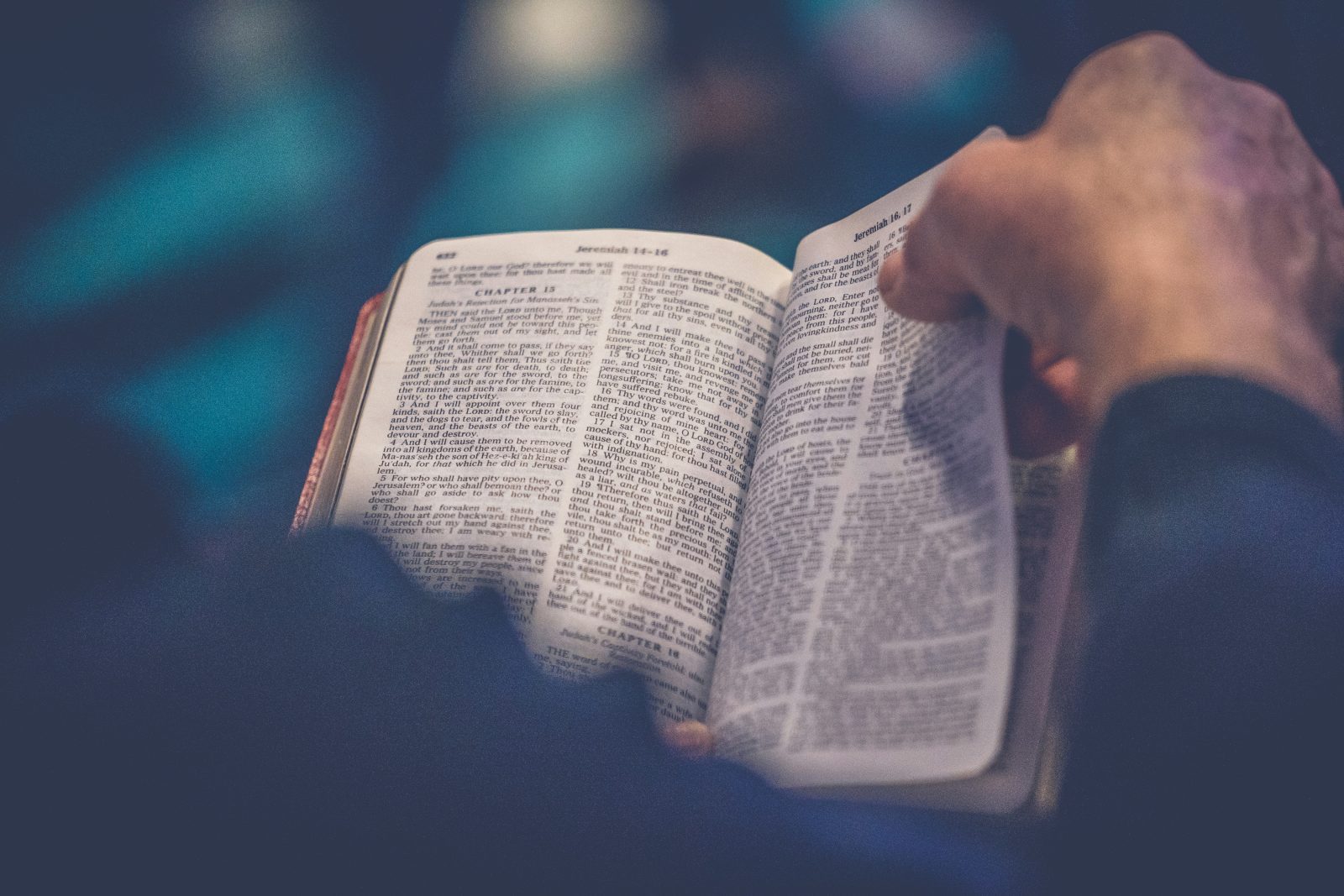
Another year is dawning, dear Father, let it be In working or in waiting, another year with Thee; Another year of progress, another year of praise, Another year of proving Thy presence all the days.
Another year of mercies, of faithfulness and grace, Another year of gladness in the shining of Thy face; Another year of leaning upon Thy loving breast; Another year of trusting, of quiet, happy rest.
Another year of service, of witness for Thy love, Another year of training for holier work above; Another year is dawning, dear Father, let it be On earth, or else in Heaven, another year for Thee.
Miss Frances Ridley Havergal, who wrote the famous New Year’s hymn,
Another year is dawning!
Dear Master, let it be
In working or in waiting,
Another year with Thee,
She spent her life “in working and in waiting” for the Master. In August 1850, before she was fourteen years old, she entered Miss Teed’s school, where the influences over her were very helpful.
The following year, she says, “I committed my soul to the Saviour, and earth and heaven seemed brighter from that moment.” She earnestly strove to make each year after that hallowed experience
Another year of service,
Of witness for Thy love.
Wherever she went in her frequent travels she was constantly asking people whether or not they knew the joys of salvation, and by thus being a witness she led hundreds of souls to the cross.
Another year of training
For holier work above.
Her heart was fixed upon the more glorious work, which God has prepared for us to accomplish in heaven.
When, in 1878, she was taken seriously ill, and was told her life was in danger, she replied:
“If I am really going, it is too good to be true!”
“Splendid! To be so near the gates of heaven.”
This hymn was written in 1874 and was first published as a New Year’s card, later in collections of her own works, and finally in many hymn books.
It has proved to be an inspiration to thousands standing at the threshold of a new year.
Is this life all there is or is there something more?
Is there a heaven and hell?
Where will I spend eternity?
These are big questions that many people have. God has given clear answers to these big questions of life in His Word- the Bible!
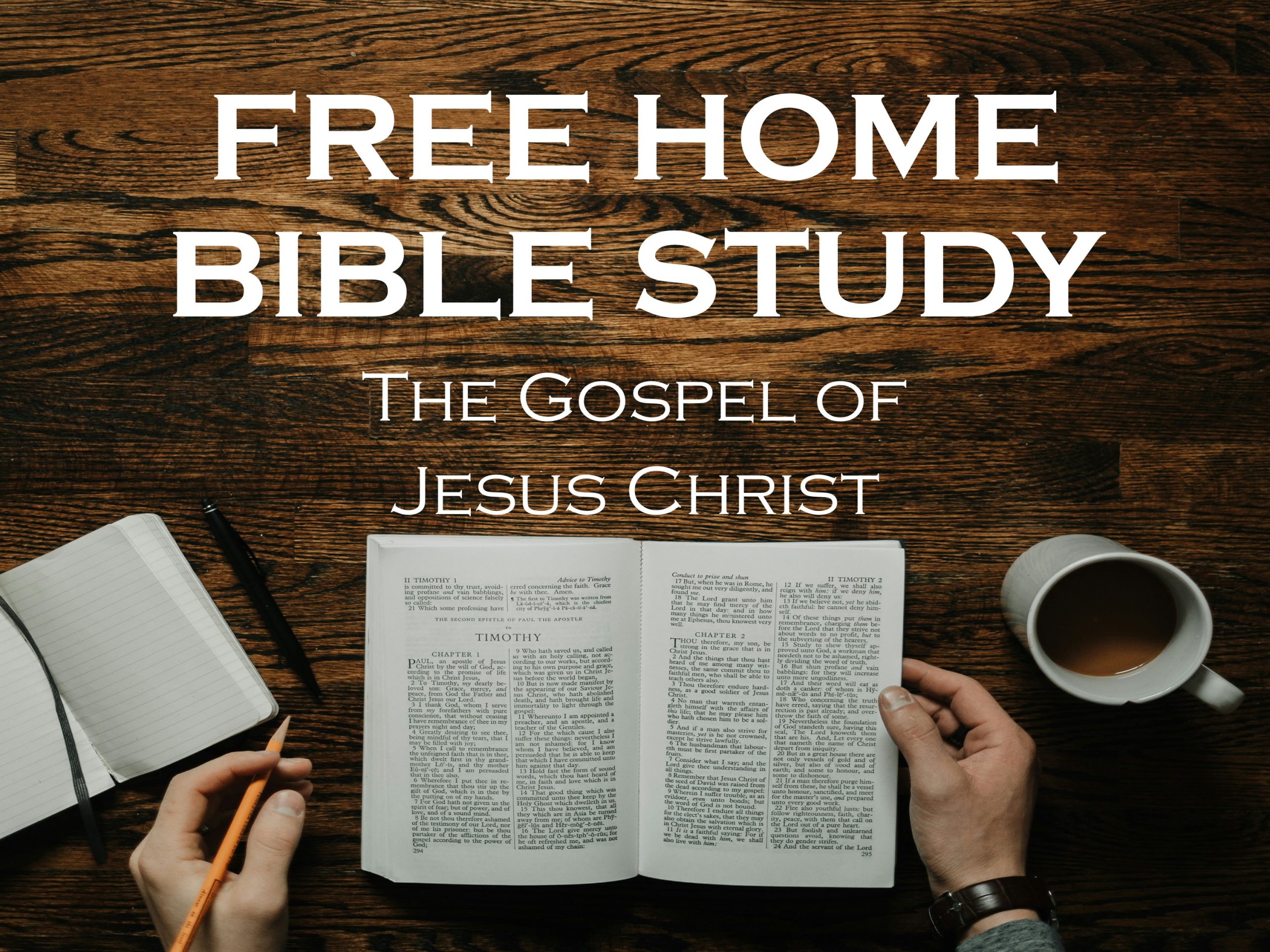
If you are interested in finding answers to questions like these, please download our FREE PDF Bible study that you can do at your own pace in the privacy of your home OR request an in-person Bible study with someone from our church. This four-part Bible study covers topics such as:
-The Perfection (Reliability) of Scripture
-Mankind’s Problem of Sin
-The Promise of the Savior
-God’s Plan of Salvation
Click the link below to access this FREE PDF Bible study or to share with others!
“The year that is drawing toward its close has been filled with the blessings of fruitful fields and healthful skies. To these bounties, which are so constantly enjoyed that we are prone to forget the source from which they come, others have been added, which are of so extraordinary a nature that they cannot fail to penetrate and even soften the heart which is habitually insensible to the ever-watchful providence of Almighty God.
In the midst of a civil war of unequaled magnitude and severity, which has sometimes seemed to foreign states to invite and provoke their aggressions, peace has been preserved with all nations, order has been maintained, the laws have been respected and obeyed, and harmony has prevailed everywhere, except in the theater of military conflict; while that theater has been greatly contracted by the advancing armies and navies of the Union.
Needful diversions of wealth and of strength from the fields of peaceful industry to the national defense have not arrested the plow, the shuttle, or the ship; the ax has enlarged the borders of our settlements, and the mines, as well of iron and coal as of the precious metals, have yielded even more abundantly than heretofore. Population has steadily increased, notwithstanding the waste that has been made in the camp, the siege, and the battlefield, and the country, rejoicing in the consciousness of augmented strength and vigor, is permitted to expect continuance of years with large increase of freedom.
No human counsel hath devised, nor hath any mortal hand worked out these great things. They are the gracious gifts of the Most High God, who while dealing with us in anger for our sins, hath nevertheless remembered mercy.
It has seemed to me fit and proper that they should be solemnly, reverently, and gratefully acknowledged as with one heart and one voice by the whole American people. I do, therefore, invite my fellow-citizens in every part of the United States, and also those who are at sea and those who are sojourning in foreign lands, to set apart and observe the last Thursday of November next as a Day of Thanksgiving and Praise to our beneficent Father who dwelleth in the heavens. And I recommend to them that, while offering up the ascriptions justly due to Him for such singular deliverances and blessings, they do also, with humble penitence for our national perverseness and disobedience, commend to His tender care all those who have become widows, orphans, mourners, or sufferers in the lamentable civil strife in which we are unavoidably engaged, and fervently implore the interposition of the Almighty hand to heal the wounds of the nation, and to restore it, as soon as may be consistent with the Divine purposes, to the full enjoyment of peace, harmony, tranquility, and union.
In testimony whereof, I have hereunto set my hand and caused the seal of the United Stated States to be affixed.
Done at the city of Washington, this third day of October, in the year of our Lord one thousand eight hundred and sixty-three, and of the Independence of the United States the eighty-eighth.”
One of the most widespread but unsound religious teachings of our day is that there are many roads to God. If men are sincere, we are told, it does not matter which path they travel—in the end they will all reach the same destination.
Speaking to a large audience on God’s eternal purpose in relation to man, a nationally prominent educator quoted an Old Testament declaration that God created man for His own glory, and said that this purpose cannot be defeated. All men, he said, are brothers, and at the last great gathering not even the most erring ones will be missing.
The speaker depicted a beautiful palace standing in a delightful garden. There was only one entrance to the castle, though there were many roads that led to it from all directions. On these roads throngs of pilgrims traveled. Many climbed over tortuous mountain trails; others followed less rocky paths; some, with songs and laughter traversed smooth and flower-bordered ways. But all, finally arrived at the palace gates, and then it mattered not that some had found the journey hard and painful, for all the sufferings of the way were forgotten in their complete and perfect joy.
A pretty picture, this—but not a true one!
Since by divine revelation alone we can discover the way to God, we must turn to the Bible, rather than to man’s imagination, for our guidance.
Jesus the Christ, describes the two roads open to men. One is a straight, narrow pathway leading to God and eternal life. The other is a broad and easy road leading to final destruction. On this broad road are many travelers, enjoying the fellowship of their comrades and thinking little about their destination. On the narrow way are fewer pilgrims, but a heavenly radiance lights their pathway.
Our Lord stated it this way: “Enter ye in at the strait gate: for wide is the gate, and broad is the way, that leadeth to destruction, and many there be which go in thereat: because strait is the gate, and narrow is the way, which leadeth unto life, and few there be that find it” (Matthew 7:13-14).
Jesus is the way (John 14:6); the only way (Acts 4:12)!
[This article was copied from a tract published by American Tract Society]
One song that I remember singing many times as a child was “This Little Light of Mine”. The words that have been sung countless times by many children through the years have a very simple, yet profound Biblical message- “This little light of mine, I’m gonna let it shine… Hide it under a bush – OH NO! I’m gonna let it shine… Don’t let Satan blow it! I’m gonna let it shine… Let it shine till Jesus comes. I’m gonna let it shine.”
This song is based on words of Christ in the Sermon on the Mount in which He told the disciples- “Ye are the light of the world. A city that is set on an hill cannot be hid. Neither do men light a candle, and put it under a bushel, but on a candlestick; and it giveth light unto all that are in the house. Let your light so shine before men, that they may see your good works, and glorify your Father which is in heaven.” (Matthew 5:14-16)
As the world descends into greater spiritual darkness, believers have been given a prime opportunity to shine brightly for the Lord Jesus Christ! Not only is it a prime opportunity, but it is also a pressing responsibility!
Through words we speak and by the way we order our lives, we can make an eternal difference on those around us as we display the transformative work of Christ within our lives! We show the world that Jesus is real and active and powerful through the reality of a life conformed to the image of Christ! The way we live our lives either attracts people to Christ or repels people from Christ.
Philippians 1:27a- “Only let your conversation be as it becometh the gospel of Christ…”
It’s been said that “We may be the only Bible people ever read!” Let that sink in!
Someone once said, “Don’t be so worried about what other people think of you. Be concerned about what they think of Christ because of you.”
In the second century A.D., an Athenian philosopher by the name of Aristides wrote the following about the shining testimony of the Christians of his day:
“But the Christians, O King, while they went about and made search, have found the truth; and as we learned from their writings, they have come nearer to truth and genuine knowledge than the rest of the nations. For they know and trust in God, the Creator of heaven and of earth, in whom and from whom are all things, to whom there is no other god as companion, from whom they received commandments which they engraved upon their minds and observe in hope and expectation of the world which is to come. Wherefore they do not commit adultery nor fornication, nor bear false witness, nor embezzle what is held in pledge, nor covet what is not theirs. They honour father and mother, and show kindness to those near to them; and whenever they are judges, they judge uprightly. They do not worship idols (made) in the image of man; and whatsoever they would not that others should do unto them, they do not to others; and of the food which is consecrated to idols they do not eat, for they are pure. And their oppressors they appease (lit: comfort) and make them their friends; they do good to their enemies; and their women, O King, are pure as virgins, and their daughters are modest; and their men keep themselves from every unlawful union and from all uncleanness, in the hope of a recompense to come in the other world. Further, if one or other of them have bondmen and bondwomen or children, through love towards them they persuade them to become Christians, and when they have done so, they call them brethren without distinction. They do not worship strange gods, and they go their way in all modesty and cheerfulness. Falsehood is not found among them; and they love one another, and from widows they do not turn away their esteem; and they deliver the orphan from him who treats him harshly. And he, who has, gives to him who has not, without boasting. And when they see a stranger, they take him in to their homes and rejoice over him as a very brother; for they do not call them brethren after the flesh, but brethren after the spirit and in God. And whenever one of their poor passes from the world, each one of them according to his ability gives heed to him and carefully sees to his burial. And if they hear that one of their number is imprisoned or afflicted on account of the name of their Messiah, all of them anxiously minister to his necessity, and if it is possible to redeem him they set him free. And if there is among them any that is poor and needy, and if they have no spare food, they fast two or three days in order to supply to the needy their lack of food. They observe the precepts of their Messiah with much care, living justly and soberly as the Lord their God commanded them. Every morning and every hour they give thanks and praise to God for His loving-kindnesses toward them; and for their food and their drink they offer thanksgiving to Him. And if any righteous man among them passes from the world, they rejoice and offer thanks to God; and they escort his body as if he were setting out from one place to another near. And when a child has been born to one of them, they give thanks to God; and if moreover it happen to die in childhood, they give thanks to God the more, as for one who has passed through the world without sins. And further if they see that any one of them dies in his ungodliness or in his sins, for him they grieve bitterly, and sorrow as for one who goes to meet his doom.”(http://www.earlychristianwritings.com/text/aristides-kay.html)
May we learn from the example of these early Christians and shine brightly for Christ in our generation!
May the world “see [our] good works, and glorify [our] Father which is in heaven.”
A notable 20th century preacher observed “a wide gulf between our modern attitudes and those of our fathers” as he compared modern Christianity with that of our forefathers. He stated, “In the early days…men conceived the world to be a battleground. Our fathers believed in sin and the devil and hell as constituting one force, and they believed in God and righteousness and heaven as the other.” Sadly, however, as he observed the attitudes within modern Christianity, he noted that “the idea that this world is a playground instead of battleground has now been accepted in practice by the vast majority of fundamentalist Christians.”
In Ephesians 6, we are reminded that every Christian is in a battle. This battle is not a physical conflict against “flesh and blood” (v. 12) but is spiritual in nature. We don’t call for a crusade; rather, we “wrestle…against principalities, against powers, against the rulers of the darkness of this world, against spiritual wickedness in high places” (v. 12). In the physical realm, the Christian is to strive to “live peaceably with all men” (Rom. 12:18). The Christian’s enemy is not against people. It is against spiritual powers that cause men to oppose God. These spiritual powers are threefold: the world, the flesh, and Satan. The world system that we are fighting against is fueled by “the lust of the flesh, and the lust of the eyes, and the pride of life” (1 Jn. 2:16). It is truly “society apart from God.” The world is our external enemy that Satan uses to attack us. The flesh is our old Adamic nature in which “dwelleth no good thing” (Rom. 7:18). The Adamic nature still hangs onto the Christian while in this body of flesh and opposes all that is spiritual in life of the Christian. The flesh is our internal enemy that Satan uses to cripple us. The Devil is the leader. He is the “accuser of the brethren”, the “adversary”, and the enemy of God. The believer battles these three things every day.
But God has not left us to suffer defeat. Rather, He has promised us victory! 1 John 5:4 says, “Whatsoever is born of God overcometh the world: and this is the victory that overcometh the world, even our faith.” God has given us special equipment necessary to fight the battle before us. He has made available to us “the whole armour of God.” God has given us all we need to win. By faith, we are called to put on the armor that God has provided (Eph. 6:14-17). It is available upon salvation, but there must be a daily appropriation of God’s battle gear. To leave any part of your spiritual life unguarded is to put you in danger of a crippling blow from the enemy. It is vitally important that one take seriously their duty to “put on the whole armour of God, that ye may be able to withstand in the evil day” (Eph. 6:13).
“Church Membership”- a Biblical doctrine or an antiquated, outdated tradition of men? Depending on who you ask, you may get a wide spectrum of opinions. When it comes to this issue, however, ultimately what matters is not man’s fallible opinion but what the infallible Word of God says! And although it may be a controversial issue, it is a topic that needs to be discussed due to the fact that the Bible discusses it and also due to the fact that there are many deficient views of church membership that are prevalent!
Deficient Views of Church Membership
Some people hold to a very low (and unbiblical) view of church membership where being a member of a church simply means having your name on a church roll even if you haven’t shown up to church in six years! Thankfully, many Christian leaders are rejecting this low view of membership and returning to a Biblical view of membership!
Others reject the idea of church membership outright and claim that it’s not in the Bible!
Amongst those who reject the idea of church membership, there are those who do so out of ignorance about what the Bible teaches concerning Biblical church membership.
There are others who reject the idea of church membership out of rebellion. They roam around as Christian ‘free agents’ from church to church without any accountability. They dislike the accountability that church membership brings. And/or they dislike the idea of submitting to authority.
Others reject the idea of church membership because they have ‘lone-ranger syndrome’! They have an unhealthy view of ‘independence’ and don’t see their need for Christian community in the context of the church. Those who have an ‘isolationist, lone-ranger’ view of the Christian life are missing out on the blessings of having a church family that supports them and bears their burdens!
Lastly, an increasingly prevalent category of those who reject the idea of church membership are those who suffer from ‘commitment-phobia’ (fear getting close to people or making relationship decisions that have a long-lasting effect)! People in our culture are becoming increasingly non-committal in their decisions and relationships. This can apply in many areas but can also apply in the realm of commitment (or lack thereof) to a local church. A love and commitment for Christ, however, will result in a love and commitment to His bride (the Church)! Jesus isn’t looking for ‘non-committal’ disciples. Rather, He is looking for those who are ready to put their hand to the plow and not look back (see Luke 9:62)!
There may be more reasons why people reject the idea of church membership but those cover some of the most prevalent reasons.
The Biblical View of Church Membership
What truly matters, though, is what does God’s Word say about church membership? If the Word of God is our final authority in faith and practice, then our opinions must bow to the standard of God’s Word!
Those are who are opposed to church membership may quickly retort to that question with an “aha” type of response reminding you that those words are never found in the Bible. Therefore (so the thinking goes), church membership is unbiblical!
But that type of thinking is not logical! Many of those who claim church membership is unbiblical because those words are not in the Bible, would strongly believe in the doctrine of the Trinity! Yet, the Bible never uses the word ‘Trinity’. However, belief in the Trinity is a test of orthodoxy within the Christian faith. Deny it and you deny an orthodox tenet of Christianity. Bible believers strongly believe in the Trinity because we read about the triune nature of God all over Scripture! The word is simply the way we describe the doctrine we clearly read about in Scripture!
It’s the same thing with church membership. Though the phrase ‘church membership’ is not in the Bible, the concept of church membership is implied all throughout the New Testament.
Here’s a few examples that show the necessity of church membership:
1) The book of Acts reveals that there was a numerical record of those that were converted and added to the church.
Acts 2:41- “Then they that gladly received his word were baptized: and the same day there were added unto them about three thousand souls.”
2) The doctrine of church discipline necessitates church membership as it specifies who can be disciplined and who has the authority to make the decision.
When the apostle Paul wrote to the church at Corinth, he spoke about how that local church was to respond to a fellow member living in unrepentant sin. In Paul’s address, we see that there is an ‘inside’ and ‘outside’ of the church and that the church has the authority and responsibility to put a ‘brother’ [a Christian] living in unrepentant sin out of the church.
1 Cor. 5:9-13- “I wrote unto you in an epistle not to company with fornicators: Yet not altogether with the fornicators of this world, or with the covetous, or extortioners, or with idolaters; for then must ye needs go out of the world. But now I have written unto you not to keep company, if any man that is called a brother be a fornicator, or covetous, or an idolater, or a railer, or a drunkard, or an extortioner; with such an one no not to eat. For what have I to do to judge them also that are without? do not ye judge them that are within? But them that are without God judgeth. Therefore put away from among yourselves that wicked person.”
How does a church put out one who was not taken in? This necessitates church membership.
In Matthew 18, we see that a brother who doesn’t heed the church’s call to repentance is to be put out of the church and treated as an unbeliever (“an heathen man and a publican”).
“And if he shall neglect to hear them, tell it unto the church: but if he neglect to hear the church, let him be unto thee as an heathen man and a publican.” (v. 17)
If church membership doesn’t exist, then how does a church know who is ‘inside’ the church and who is ‘outside’ the church in order to deal with a Christian living in unrepentant sin and render a verdict in the area of church discipline.
3) Church decisions are made by each local church. Membership specifies who can vote in matters of church business.
In Acts 6, due to the rapid growth of the church many widows in the church were being neglected. To remedy this situation, the leaders in the church “called the multitude of the disciples unto them” (v. 2) [i.e, the whole church] and told them to “look ye out among you seven men of honest report, full of the Holy Ghost and wisdom, whom we may appoint over this business.” (v. 3)
These men who were selected became the first deacons in the early church. These men were selected by the church under the direction of church leadership [the apostles].
This was a church decision! Without church membership, how do you determine who gets to have a say in church decisions?
4) The duty of a pastor and the responsibility of a believer demand that church membership exists.
Hebrews 13:17 speaks of a believer’s submission to pastoral leadership but also speaks of the fact that pastors will give an account for those whom they pastor.
“Obey them that have the rule over you, and submit yourselves: for they watch for your souls, as they that must give account, that they may do it with joy, and not with grief: for that is unprofitable for you.” (Hebrews 13:17)
How does a Christian know which pastor(s) to obey and submit to unless they are a member of a specific church? If a Christian is not a member of a local church, then how do they obey this command? Who do they submit to?
How does a pastor know which believers he will give an account for unless there is church membership? How does a pastor know who he oversees spiritually unless there is church membership?
In Acts 20:28-29, Paul told the elders at the Church in Ephesus to- “Take heed therefore unto yourselves, and to all the flock, over the which the Holy Ghost hath made you overseers, to feed the church of God, which he hath purchased with his own blood. For I know this, that after my departing shall grievous wolves enter in among you, not sparing the flock.”
How would the Ephesian elders know who they were to feed, and oversee spiritually, and protect from spiritual wolves, if they didn’t have a way to measure who was part of their ‘flock’.
Pastors will be held responsible for those they pastor. This implies that a pastor knows who he is accountable for and who he isn’t accountable for. This necessitates church membership.
There are more reasons that could be given, but those four are sufficient reasons to believe in church membership!
Love the Church
If you are a Christian, give yourself (your time, energy, spiritual gifts, resources) to a Biblically-ordered, spiritually-healthy, Christ-centered, Bible-preaching local church!
A person who loves Christ will also love His bride (the Church)! Love and serve Christ by loving and serving the Church. Center your life around the church.
Teach your children to love the church. Teach your children that church is a priority. When parents treat church as optional, children usually grow up to treat the church as unnecessary!
A Christian who tries to live without the church is like an arm that tries to live without the body. Spiritually healthy Christians are attached to spiritually healthy churches!
Join a Biblical Church (not a “Perfect One”)
Also, look for a Biblical church, not a perfect church! Biblical churches are Biblical because they base their doctrine and practice solely on the Bible! At the same time, Biblical churches are made up of ‘sinners saved by grace’ who are in the process of sanctification.
Consider these wise words from C.H. Spurgeon- “If I had never joined a church till I had found one that was perfect, I should never have joined one at all. And the moment I did join it, if I had found one, I should have spoiled it, for it would not have been a perfect church after I had become a member of it. Still, imperfect as it is, it is the dearest place on earth to us.”
‘What is the purpose of life?’ ‘Why am I here?’ ‘What is the meaning to it all?’ These are the kinds of questions that mankind has asked since the beginning of time. Many have pursued meaning in life only to find that the things of this earth cannot satisfy. Many have pursued riches, pleasure, industry, human philosophies only to find in them emptiness and futility. Many have mistakenly come to the false conclusion that there is no ultimate purpose in life which has led many to despair. So where can we go to find the answers? Where can we find meaning in life? Thankfully, God has given us the answers we need in the Word of God.
In the book of Ecclesiastes, “the Preacher” (i.e., Solomon) reviews man’s life “under the sun” (apart from God) and concludes that “all is vanity”. Solomon was able to look back upon his life and see the futility of life apart from God. Solomon showed that the alternative to a life of faith was an empty, meaningless “striving after wind”. A life apart from God is a life full of frustration and confusion. It is a life that has stamped upon it “vanity of vanities”. And although man will strive after earthly things to fill the emptiness within, it will only lead to greater emptiness and despair.
When life is lived apart from God, it will never satisfy. Futility, despair, and “striving after wind” will be the result of a life apart from God. As Solomon nears the end of Ecclesiastes and has made a thorough review of all the works of man that are done “under the sun” (apart from God), he finally reaches a conclusion to his long investigation. He says, “Let us hear the conclusion of the matter: Fear God, and keep his commandments: for this is the whole duty of man. For God shall bring every work into judgment, with every secret thing, whether it be good or evil” (12:13-14). All is vanity apart from God, but when God becomes central to the reason we exist, life takes on the meaning that it was intended to. When God is central in the course of our life, life takes on fullness, meaning, and satisfaction.
When God is left out of the picture, life is futile. Yet when God becomes our motivation for living, life becomes full. We were made by God and for God. When we learn to fear God and keep His commandments, we cease living in futility and begin living in fullness. When we realize that there will be a day when we stand before God and give an account for our life, it brings meaning and importance to everything we do. And this is the conclusion of the matter!
Bertrand Russell was a famous atheist philosopher who was once asked what he would say to God if he found himself standing before Him after he died. Russell said that he believed that he could charge God with not giving him enough evidence to believe in Him. Russell’s argument, however, goes against a fundamental truth found in Romans 1 that explains that God has clearly revealed Himself to all of mankind so that they are all without excuse.
Romans 1:18 states that the “wrath of God is revealed from heaven against all ungodliness and unrighteousness of men, who hold the truth in unrighteousness.” The wrath of God is revealed against men because they choose to suppress the truth of God’s existence. All of mankind knows that God exists (whether they claim to or not) because “that which may be known of God is manifest in them; for God hath shewed it unto them” (Rom. 1:19). An atheist denies with his words what he knows to be true in his heart. The Bible states that “the invisible things of him from the creation of the world are clearly seen, being understood by the things that are made, even his eternal power and Godhead…” (Rom. 1:20). God’s wrath is revealed against all the ungodly who suppress the truth of God’s revelation of Himself so “…that they are without excuse” (Rom. 1:20b). Wrath comes because of rejected revelation. There are two ways in God has revealed Himself: 1) General revelation 2) Special revelation. In general revelation, God has made Himself known through creation and man’s conscience (Rom. 2:14-15) to all of mankind. The Bible declares that “The heavens declare the glory of God; and the firmament sheweth his handiwork” (Ps. 19:1). Through the observation of nature’s order, complexity, and design, one is left without excuse that there is a Designer/Creator of the Universe! Romans 1:20 states that God’s eternal power and Godhead are “clearly seen” and “understood” from all that has been created. God’s special revelation is the Word of God.
There is enough evidence in creation and conscience to condemn all men for rejecting God. However, general revelation alone can never save a person. It takes the special revelation of God’s Word applied to the heart by the Holy Spirit and received by personal faith to bring salvation to one’s soul. Apart from the saving grace of God received by faith in Jesus Christ, all “without excuse” and under the wrath of God. That is why it is imperative that we go to all men and bring them the truth of salvation as revealed in God’s Word. Romans 10:14 says “How then shall they call on him in whom they have not believed? And how shall they believe in him of whom they have not heard? And how shall they hear without a preacher?”
We must be active in sharing God’s special plan of salvation to all people. We must support missionaries to go to foreign lands with the Gospel. We must always be proclaiming the Gospel!
Have you believed the Gospel? If so, who can you share the Gospel with today?



 One of the most widespread but unsound religious teachings of our day is that there are many roads to God. If men are sincere, we are told, it does not matter which path they travel—in the end they will all reach the same destination.

 “Church Membership”- a Biblical doctrine or an antiquated, outdated tradition of men? Depending on who you ask, you may get a wide spectrum of opinions. When it comes to this issue, however, ultimately what matters is not man’s fallible opinion but what the infallible Word of God says! And although it may be a controversial issue, it is a topic that needs to be discussed due to the fact that the Bible discusses it and also due to the fact that there are many deficient views of church membership that are prevalent!
 Solomon showed that the alternative to a life of faith was an empty, meaningless “striving after wind”. A life apart from God is a life full of frustration and confusion. It is a life that has stamped upon it “vanity of vanities”. And although man will strive after earthly things to fill the emptiness within, it will only lead to greater emptiness and despair.